
OWL-Sight: Low-Altitude FPV Drone Detection
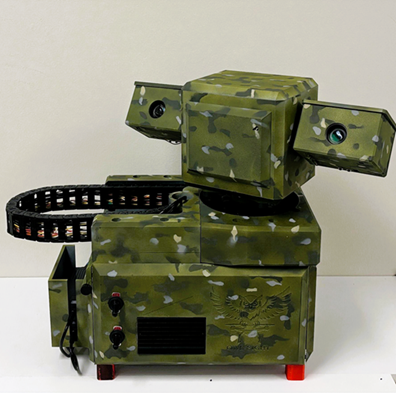
OWL-Sight System – 1st Prototype
Since the onset of the Russian invasion of Ukraine in 2022, first-person-view (FPV) drones have rapidly evolved in both capability and accessibility. Their compact size, high maneuverability, and low cost enable operators to deliver explosive payloads with reduced personal risk. As a result, FPV drones pose an increasingly significant threat to personnel, military assets, and critical infrastructure.
Existing countermeasures have primarily focused on disrupting the radio-frequency (RF) communication link between the drone and its operator. While effective in some scenarios, these methods are ineffective against drones controlled via hard-wired fiber optic connections. This emerging capability underscores the need for alternative detection and tracking solutions.
OWL-Sight addresses this gap by integrating acoustic triangulation, computer vision, and motorized tracking systems. Together, these components enable the detection, localization, and continuous tracking of low-altitude FPV drones, generating actionable targeting data for integration with a range of practical countermeasures.
.
OWL-Strike: FPV Drone Engagement and Neutralization
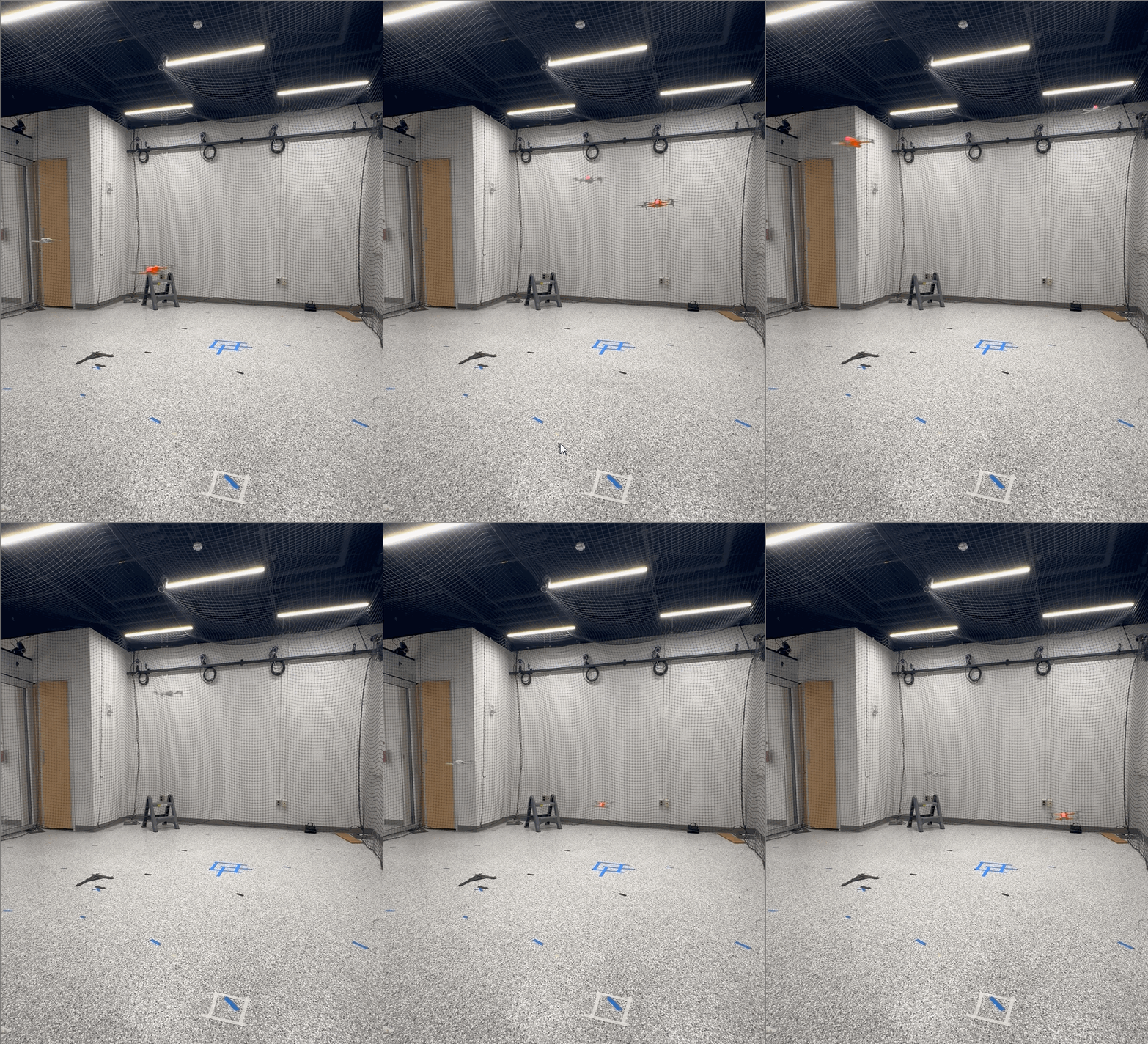 OWL-Strike extends beyond traditional countermeasures by focusing on drone-to-drone engagement and collision-based, non-kinetic neutralization. In this approach, friendly FPV platforms are used to intercept hostile drones directly, either by forcing evasive errors or physically disrupting their flight path through controlled contact. Rather than relying on explosives or destructive payloads, the system emphasizes precision maneuvering, autonomy-assisted tracking, and timing to disable or deflect threats with minimal secondary risk. This method supports operations in constrained or sensitive environments, where reducing collateral damage and maintaining control over the engagement space are critical.